The unfolding of a beautiful public park for the enjoyment of all.
In 2025, HIGH PARK ACCESS formalized as a volunteer-based organization with a mandate to work to keep roads open to vehicles to ensure High Park is accessible for all.
More to add…

In May 2023, the Toronto City Council adopted the recommendations in the High Park Movement Strategy final report (IE3.7) with amendments and directed staff to continue car-free days on Saturdays, Sundays and statutory holidays.
Read more about the City of Toronto’s High Park Movement Strategy here.
With growing concern over the road closures and removal of parking spaces, citizens came together to spread the word…
More to add…
In 2021, the City of Toronto launched the High Park Movement Strategy to rethink the travel network serving in the context of the city’s growing population, changing travel patterns and the impacts of COVID-19.
The goal of the study was to improve mobility within the park, while prioritizing safety, accessibility and the park’s environment.
Read more about the City of Toronto’s High Park Movement Strategy here.
In the 1950s and 1960s, many of the amenities we know and love today were added, including Hillside Gardens, the swimming pool, playgrounds, tennis courts, picnic sites, and the Grenadier Restaurant (1958).
Image: Grenadier Restaurant, Globe & Mail May 5, 1958
In 1930, the City purchased 71 acres to the west of the park (formerly part of the Ellis estate), encompassing all of Grenadier Pond within the park boundaries.
Image: Grenadier Pond, by John Howard, 1879. City of Toronto Culture, Museums and Heritage Services.
In 1914, the High Park Forest school opened. With outdoor tents and wooden platforms, the Forest School provided outdoor education and meals for malnourished children exposed to cholera and tuberculosis.
The High Park Nature Centre’s present home was built on this site in 1932. Read more here.
In 1893, what is now known as the Zoo was established as the High Park Animal Display. It is Canada’s oldest animal display, originally housing a deer pen and an aviary (from the City of Toronto website).
Read more about the High Park Zoo here.
In 1876, the City aquired 170 acres east of the original 163 acre estate deeded to the City of Toronto by John and Jemima Howard in 1873.
Image: A View of the Lake in Front of Colborne Lodge, by John Howard, 1870. The City of Toronto Museums Collection.
In 1873, the Howards deeded the property to the city for use as a "Public Park for the free use benefit and enjoyment of the citizens of the City of Toronto forever.”
Image: The Entrance Gate to Colborne Lodge (detail), by John Howard, 1870. Toronto Public Library Collection.
In 1836, City Surveyor John Howard and his wife Jemima purchased a 163 acre wooded lot on the lakeshore west of Toronto.
The Howards named the estate High Park, since it is the highest point in the area.
Image: Portrait of John Howard, 1847. By Thomas H. Stevenson. City of Toronto Museums Collection.Image: A View of the Lake in Front of Colborne Lodge, by John Howard, 1870. The City of Toronto Museums Collection.
Archeological evidence indicates that this land has been travelled and inhabited by thousands of Indigenous people since the last ice age glaciers receded 11,000 years ago.
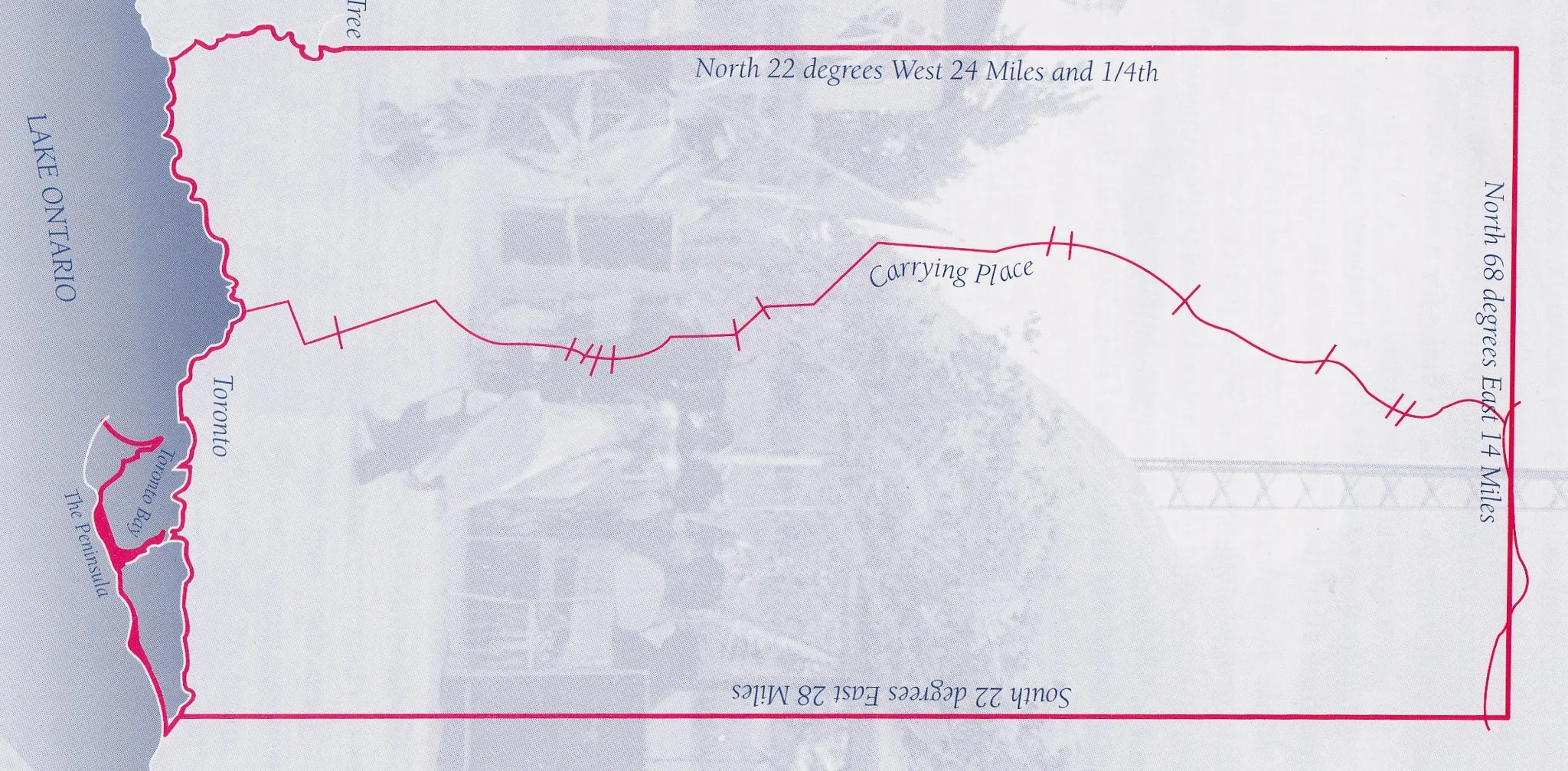
In the late 1600s, the Iroquois village of Teiaiagon flourished just northwest of the park, on the edge of the Humber valley.
Image: The Carrying Place map from Toronto Carrying Place Facebook page.
The history of High Park begins with the last Ice Age, and its topography and soils are a legacy from that time. When the melting glaciers began their slow retreat to the north 12,000 years ago, they formed Lake Iroquois – a lake that was bigger and deeper than the present Lake Ontario – and deposited sands and silts on its bottom. These deposits form what is known today as the Iroquois Sand Plain. As temperatures continued to warm and Lake Iroquois shrank, glacial rivers began to flow across the plain’s sandy soils. These carved the ravines that define High Park, formed an extensive web of streams and ponds, and left its flat and gently rolling uplands.
From High Park: Restoring a Jewel of Toronto’s Park System by Joanna Kidd, 2000.
We are grateful to High Park Nature, a volunteer initiative led by the High Park Natural Environment Committee, for compiling and sharing on their website a comprehensive history of High Park.
Most of the information on our timeline has been abridged from High Park Nature’s Cultural History of High Park pages, unless otherwise noted.
Read more about the Aboriginal history of Toronto on the Carrying Place Facebook page.